In Short
- Trouble breathing, speaking or swallowing — or swelling spreading to the neck or eye — means call 000 or go straight to hospital. Don't wait for a dentist.
- A knocked-out adult tooth is a race against time. Healthdirect says aim for a dentist within 30 minutes. Keep the tooth moist in milk, never dry. Don't try to replant a baby tooth.
- Severe toothache, facial swelling, fever, a bad taste, or a tooth pushed out of position are same-day dental problems — not something to sleep on.
- A small painless chip or a lost filling with no pain can usually wait for a regular appointment. When in doubt, call us and we'll tell you which one you're in.
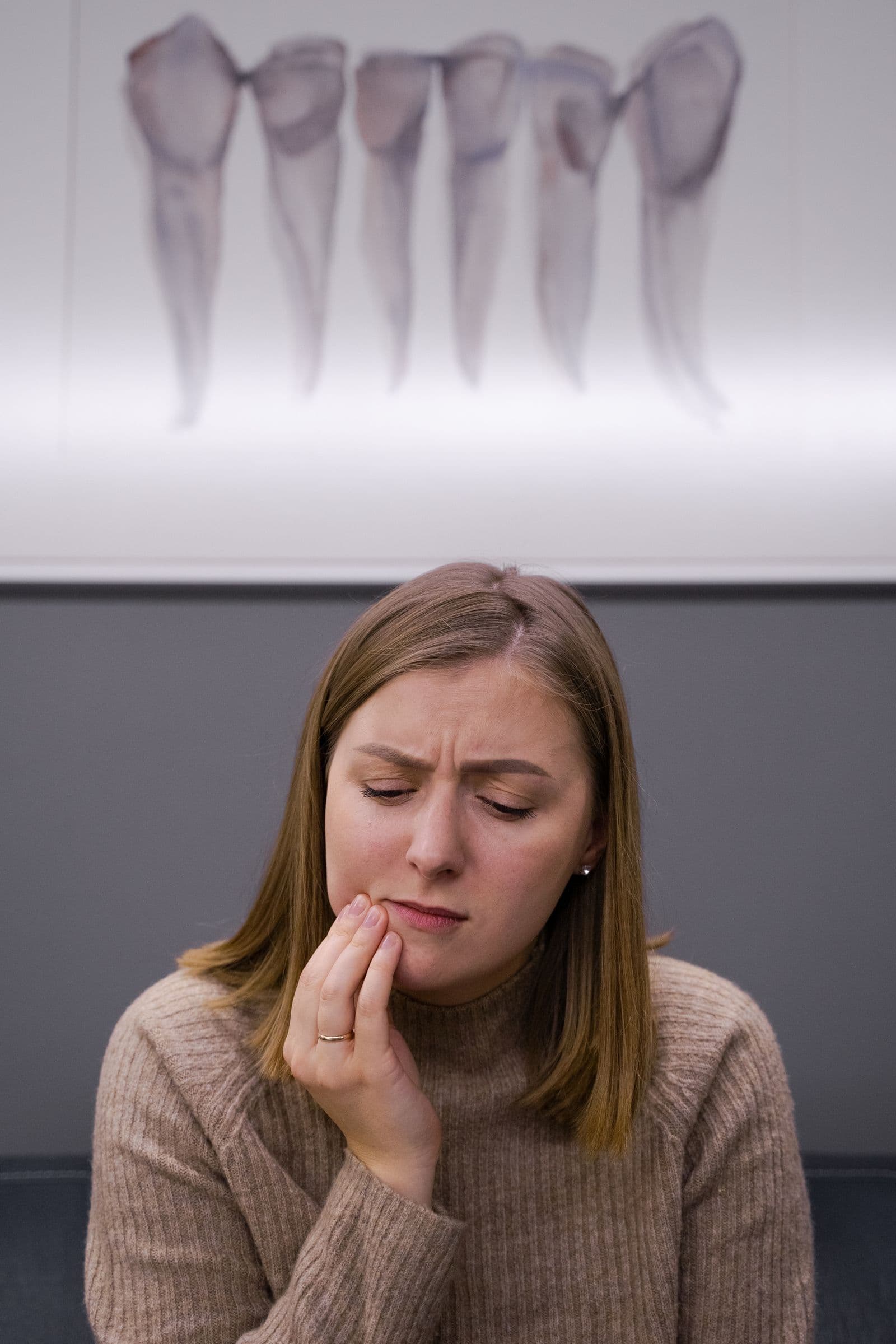
The phrase “dental emergency” covers a wide range — from a chipped tooth that can wait a few days to a spreading infection that can't wait an hour.
The useful split isn't about pain level, it's about what's at risk: a tooth, or an airway. Here's how to read the signs, using guidance from Healthdirect and Queensland Health.
Call 000 or Go Straight to Hospital
A dental clinic manages teeth and infections that are localised to the mouth.
It cannot manage an airway.
Healthdirect says to call triple zero (000) or go directly to an emergency department if you have any of these:
- Trouble breathing, speaking, or swallowing
- Swelling around the eye or neck — not just the cheek
- Heavy bleeding that is going down the throat
- The mouth or tongue is very swollen
- Major facial injury or a jaw that won't open or close normally
Dental swelling that is tracking toward the neck or the floor of the mouth belongs in this group, even if it started as an ordinary toothache.
See a Dentist the Same Day
These situations aren't usually life-threatening, but a delay of even one or two days can turn a tooth that could be saved into one that can't.
- An adult tooth completely knocked out of its socket
- Severe toothache that has lasted more than two days or won't ease with pain medicine
- A cracked or broken tooth with sharp pain, especially when biting
- Visible swelling in the cheek, jaw, or gum — with or without a fever or bad taste
- A tooth pushed sideways or out of position after a knock
- A lost crown or filling where the exposed tooth is painful or has a sharp edge cutting the cheek
- Gum bleeding that hasn't slowed after around ten minutes of firm pressure
Swelling with fever, a bad taste, or pain that gets worse when you bite is often a dental abscess. The pain can ease when pus finds an exit, but the infection underneath does not clear on its own.
A Knocked-Out Tooth: Why Every Minute Matters
This is the one dental injury where timing changes the outcome more than anything else.
An adult tooth that has come out completely can often be saved — if you keep it moist and get to a dentist fast. Healthdirect recommends aiming to see a dentist or hospital within 30 minutes, and notes that it may still be possible to save the tooth up to two hours after the injury.
- Pick the tooth up by the crown — the white visible part. Never hold the root.
- If it's dirty, rinse it briefly in milk or sterile saline. No scrubbing, no tap water if you can help it.
- If the person is calm and fully conscious, gently place it back in the socket and bite down on a clean cloth to hold it there.
- If you can't replace it, keep it moist in a container of milk or saline. Never let it dry out, and never store it in water.
- Get to a dentist immediately. Healthdirect says the best chance is within 30 minutes, and it may still be possible up to two hours after the injury.
A knocked-out baby tooth is different — do not put it back. Healthdirect states that a baby tooth will not be replaced because doing so can damage the permanent tooth developing underneath. Call us and we'll check that the socket and adult tooth are unaffected.
What Can Usually Wait for a Regular Appointment
Not every broken or damaged tooth is a same-day urgency.
If there is no pain, no swelling, and no sharp edge cutting the cheek or tongue, these situations are uncomfortable but can generally wait:
- A small chip with no pain and no edge cutting the tongue or cheek
- A lost filling or crown with no pain — protect the area, avoid hard foods on that side, and call us for the next available appointment
- Mild cold sensitivity that settles within a few seconds
- A broken denture with no injury to the mouth tissue
First Aid While You Wait to Be Seen
None of this replaces treatment — it just keeps things manageable until you're in the chair.
- For swelling: hold a cold compress or wrapped ice pack against the outside of the cheek — not directly on the skin. Don't use heat.
- For toothache: take pain medicine as directed on the label. Do not place aspirin or any tablet directly onto the gum or tooth — it can burn the tissue.
- For bleeding: apply firm, constant pressure with clean gauze or cloth. Don't lift it to check every minute — that breaks the clot.
- For a knocked-out baby tooth: do not put it back. Keep your child calm, control the bleeding, and call us.
For bleeding: current Healthdirect guidance says bleeding from mouth or tongue cuts usually stops within about ten minutes of constant pressure. If it hasn't stopped after ten minutes, seek urgent medical care.

At Mount Druitt Dental Care
In Pain Right Now?
Call (02) 9055 1735. Same-day appointments during opening hours. No emergency surcharge.
How We Handle Emergency Visits
Call us on (02) 9055 1735 first if you can — we'll ask a few quick questions, tell you if it's a hospital situation, and hold a same-day time during opening hours (Monday to Friday 9am–9pm, Saturday 9am–5pm).
On arrival we assess the pain, take digital X-rays as needed, and treat the cause on the day — whether that's a re-cemented crown, a temporary filling, the start of a root canal, or an extraction when the tooth can't be saved.
There is no emergency surcharge. More detail on what the appointment includes is on our emergency dental page.
After hours, call (02) 9055 1735. We'll advise whether to come to us first thing or go to a hospital tonight. If breathing or swallowing is affected, call 000 and don't wait.
We are an approved DentiCare provider. If emergency treatment is needed and cost is a concern, ask about interest-free payment plans before we start.
Please note: This article provides general information based on Healthdirect and Queensland Health guidance current as of September 2026. It is not a substitute for professional assessment. If you are unsure how urgent something is, call us or healthdirect on 1800 022 222.