
Cavity filling cost in Australia typically ranges from around $150 to $400 for a standard tooth-coloured filling, depending on the size of the cavity, the tooth being treated and the complexity of the procedure. Larger fillings or restorations involving several tooth surfaces may cost more.
Understanding how dental filling prices are calculated can make it easier to compare treatment options and prepare for an appointment. This guide covers common filling materials, average costs, health insurance coverage and factors that affect the final bill.
How much does a cavity filling cost in Australia?
A standard cavity filling in Australia generally costs between $150 and $400, although prices vary between dental practices. A small filling on one surface usually costs less than a complex filling covering several surfaces of a tooth.
Historical figures provide a useful comparison. The Australian Dental Association's 2022 dental fee survey reported average fees of $167 for a one-surface front tooth filling and $178 for a one-surface back tooth filling. Clinic price guides generally place many standard composite fillings within the broader $150 to $400 range.
Average filling prices by tooth location
The cost of a dental filling is partly determined by where the affected tooth sits and how much repair is needed.
| Filling type | Average fee (2022) | Tooth location |
|---|---|---|
| One-surface filling | $167 | Front teeth |
| Two-surface filling | $202 | Front teeth |
| One-surface filling | $178 | Back teeth |
| Two-surface filling | $220 | Back teeth |
These historical Australian fee survey figures are useful benchmarks, not current fixed prices or quotes from an individual dental clinic. A dental examination is needed to confirm the treatment and exact cost.
Why do Sydney filling prices vary?
Composite filling cost in Sydney can differ between dental clinics because of treatment complexity, the materials used and individual practice fees. Two patients receiving a filling on the same type of tooth may receive different quotes if the amount of damage differs.
Additional services, such as an examination or X-rays, may also affect the total dental bill. An itemised quote can help patients understand which services are included in the filling fee.
What types of dental fillings are available?

The main types of dental fillings include composite resin, amalgam, glass ionomer and porcelain restorations. Each filling material has different properties, uses and cost considerations.
The most suitable type of filling depends on the tooth's position, the amount of remaining healthy tooth structure and the demands placed on the restoration during chewing.
Composite resin fillings
Composite resin is a tooth-coloured filling material commonly used to repair cavities in both front teeth and back teeth. The material bonds directly to the tooth and can be matched to the surrounding enamel for a natural appearance.
A composite filling is often completed during one dental appointment. Its cost depends on the extent of the damage and the number of surfaces requiring repair.
Amalgam fillings
Amalgam is a silver-coloured material made from a combination of metals. Traditionally used for back teeth because of its strength, amalgam is now less common in Australian dental practices.
In an amalgam vs composite filling comparison, composite offers a tooth-coloured appearance and generally requires less removal of sound tooth structure. Existing amalgam fillings do not automatically need replacement if they remain functional and there is no clinical reason to remove them.
Glass ionomer fillings
Glass ionomer is a tooth-coloured dental filling material that releases fluoride. It is commonly used for temporary restorations, selected cavities and certain treatments involving children's teeth.
Glass ionomer is generally less resistant to heavy chewing forces than composite resin. Its suitability depends on the tooth's location and the intended purpose of the filling.
Porcelain fillings and restorations
Porcelain inlays and onlays are custom-made restorations used when a tooth requires more extensive repair. Unlike a direct filling, a porcelain restoration is usually manufactured outside the mouth before being bonded to the tooth.
This option generally involves more treatment time and a higher cost than a simple filling. Porcelain may be considered when the tooth has lost too much structure for a conventional direct restoration.
Comparing dental filling materials
These treatments are provided through dental practices rather than purchased directly. Material availability varies, and the dentist determines which option is clinically suitable after assessing the tooth.
| Material | Appearance | Common use | Cost consideration | Suitable for |
|---|---|---|---|---|
| Composite resin | Tooth-coloured | Small to moderate cavities | Standard direct-filling pricing | Front and back teeth |
| Amalgam | Silver-coloured | Selected back tooth restorations | Request an individual quote | Cases where amalgam is clinically appropriate |
| Glass ionomer | Tooth-coloured | Temporary and selected restorations | Depends on application | Baby teeth and selected low-stress areas |
| Porcelain | Tooth-coloured | Inlays and onlays | Usually higher than a direct filling | Larger restorations |
What factors affect the cost of a tooth filling?
The cost of a tooth filling depends on the size of the cavity, the affected tooth, the filling material and the complexity of treatment. Dental fees can also vary when additional procedures are needed to restore the tooth properly.
Size and depth of the cavity
A small cavity affecting one surface of a tooth generally requires less filling material and treatment time. A filling that wraps around multiple surfaces is more complex and may cost more.
The final cost also depends on how much decay has damaged the tooth structure. Deep decay may require a different treatment approach if a standard filling cannot adequately repair the damage.
Tooth location and number of surfaces
A filling on a front tooth may involve different techniques from one on a molar. Back teeth withstand greater chewing forces, and larger restorations may require additional shaping and careful bite adjustment.
Dental filling fees are commonly classified according to the surfaces of the tooth being restored. A small filling on one surface will generally have a lower fee than a restoration involving three or more surfaces.
Filling material and treatment complexity
The type of filling used can affect the cost because materials involve different preparation methods and techniques. A direct filling with composite resin is typically completed in one visit, while laboratory-made porcelain restorations require additional work.
An especially complex cavity may also need more extensive dental treatment. When there is insufficient healthy tooth structure remaining, an inlay, onlay or crown may be more suitable than another filling.
Additional dental examination costs
An initial dental check-up may be needed to assess the tooth and identify decay that cannot be seen during a visual examination. X-rays can help determine how deeply a cavity extends.
Whether these services are charged separately depends on the dental clinic's fee structure. Patients can request a breakdown of the examination, imaging and treatment charges before proceeding.
Does private health insurance cover dental filling costs?
Private health insurance may cover part of the cost of a dental filling when a policy includes suitable extras benefits. The amount paid by the insurer depends on the policy, applicable limits, waiting periods and the dental item being claimed.
General dental extras cover
Many extras policies include fillings under general dental services. Some insurers pay a percentage of the treatment fee, while others provide a fixed benefit for specific dental item numbers.
The out-of-pocket cost is the remaining amount after any applicable insurance benefit has been deducted from the dental fee. For example, a $250 filling with a $150 rebate would leave a $100 patient contribution.
This example is illustrative rather than a guaranteed insurance benefit.
Child Dental Benefits Schedule
The Child Dental Benefits Schedule helps eligible children aged 0 to 17 access certain basic dental services, including fillings. Eligibility depends on Medicare requirements and qualifying government payments.
For benefit periods beginning in 2026, the Australian Government provides up to $1,158 per eligible child over two consecutive calendar years. A period that began in 2025 has a different cap, so the child's remaining balance should be checked before treatment.
Families may be able to use the Child Dental Benefits Schedule to reduce or eliminate the cost of an eligible filling, depending on the applicable benefit amount and billing arrangements.
What happens during a dental filling appointment?
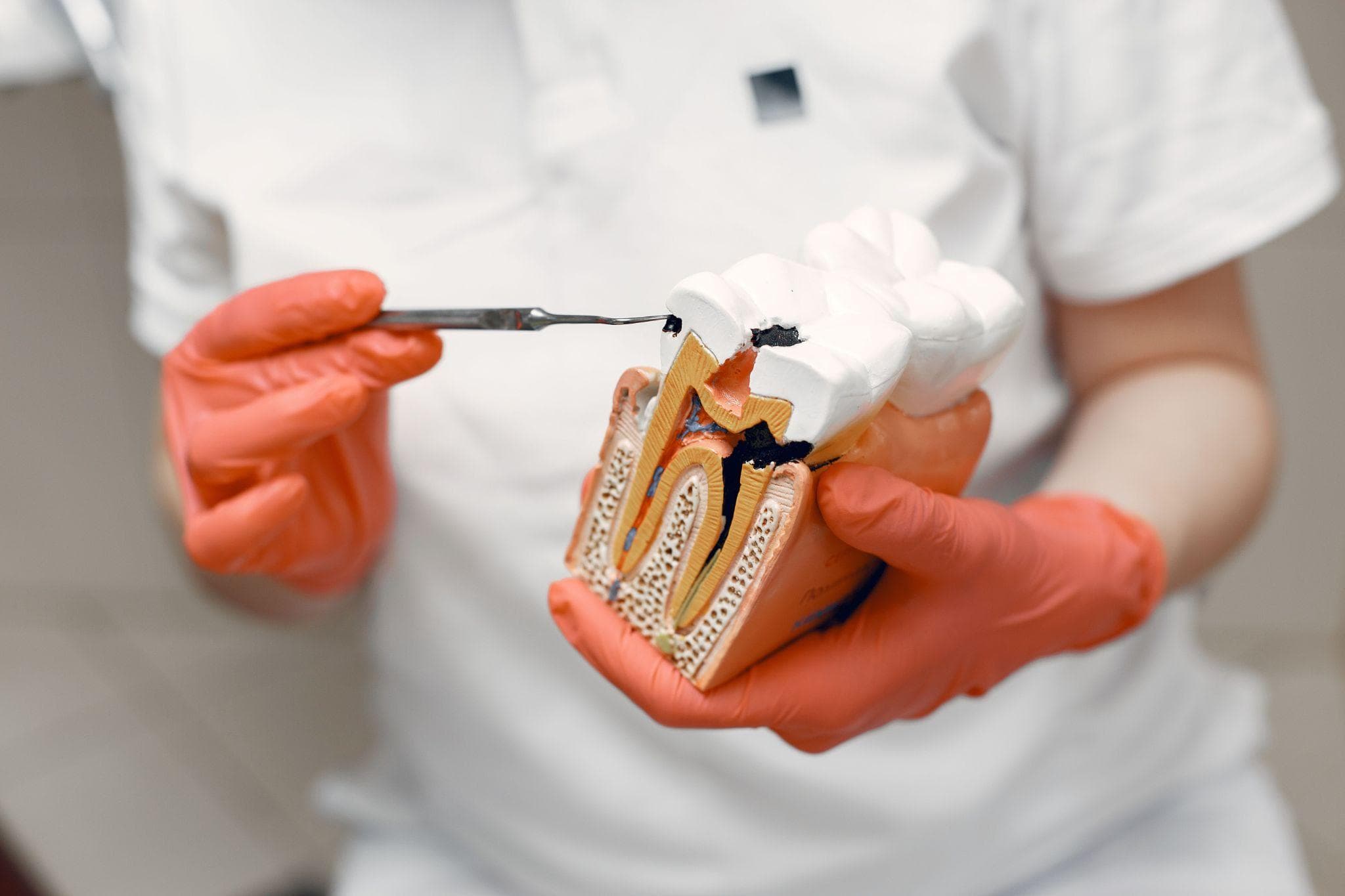
A dental filling appointment generally involves examining the affected tooth, removing decay, placing a suitable restorative material and checking the bite. A straightforward direct filling can usually be completed in one visit.
Before the filling procedure
The dental professional will examine the tooth and may recommend an X-ray to determine the extent of the damage. Local anaesthetic may be used to make the filling procedure more comfortable.
Once the area is prepared, damaged or decayed tooth structure is removed while preserving as much healthy tooth as possible.
During and after the filling
After the cavity has been cleaned, the filling material is placed and shaped to restore the tooth. Composite resin is usually applied in layers and hardened using a curing light.
The filling is then polished, and the bite is checked for any uneven contact. Some temporary tooth sensitivity may occur after treatment, particularly when eating hot or cold foods.
Persistent pain, worsening sensitivity or discomfort when biting should be assessed by a dental professional.
How can patients manage dental filling costs?
Dental filling costs can often be managed by addressing cavities early, checking available benefits and confirming the total treatment fee before the appointment. Choosing an appropriate filling based on clinical needs can also help avoid unnecessary dental work.
Treat tooth decay before it becomes more extensive
Early dental care may help preserve more natural tooth structure and reduce the need for larger restorations. A small cavity is often simpler to repair than a tooth with extensive decay.
Regular dental examinations also help identify problems before symptoms become more noticeable. Not every early area of tooth decay requires drilling, so a dentist can determine whether preventative care or a filling is appropriate.
Request an itemised treatment quote
A written quote can clarify the cost of the filling, the dental item numbers and any additional examination or X-ray fees. This also makes comparing dental fees between clinics more meaningful.
The cheapest filling is not necessarily the most suitable option. The condition of the tooth, the durability of the restoration and the recommended material are important considerations.
Check health fund benefits and payment options
Patients with private health insurance can check their remaining dental cover before an appointment. The insurer can confirm applicable rebates, annual limits and any waiting periods.
Some clinics also offer dental payment plans for spreading the cost of treatment. Terms, eligibility and any associated fees should be reviewed before selecting a payment arrangement.
Get a clearer picture of dental filling costs
Cavity filling costs in Australia vary according to the tooth being treated, the amount of damage and the chosen restorative material. While a standard composite filling commonly falls within the $150 to $400 range, a clinical assessment is needed to establish the appropriate treatment and final price.
At Mount Druitt Dental Care, we provide tooth-coloured fillings, assess the condition of each tooth and explain treatment options before proceeding. Our team also supports health fund claiming through HICAPS to help patients understand their expected out-of-pocket expenses.
Book a dental examination at Mount Druitt Dental Care to discuss treatment options and get a personalised cost estimate.
At Mount Druitt Dental Care
Need a Filling?
Book an examination and get a personalised cost estimate.