In Short
- A crown repairs a tooth that's still there but damaged. An implant replaces a tooth that's missing or can't be saved — they're not interchangeable options for the same problem.
- A crown is usually done in two visits over one to two weeks. An implant is a longer process, generally 4 to 8 months from placement to final crown, to allow the bone to fuse properly.
- Nationally, the Australian Dental Association's 2022 fee survey (via CHOICE) puts a full porcelain crown at around $1,678 on average, and the implant placement plus abutment at roughly $1,700–$4,400 before the crown on top.
- We don't quote a flat price for either online, since it depends on the tooth — you'll get an exact figure after an exam and X-ray, and we offer interest-free payment plans through DentiCare either way.
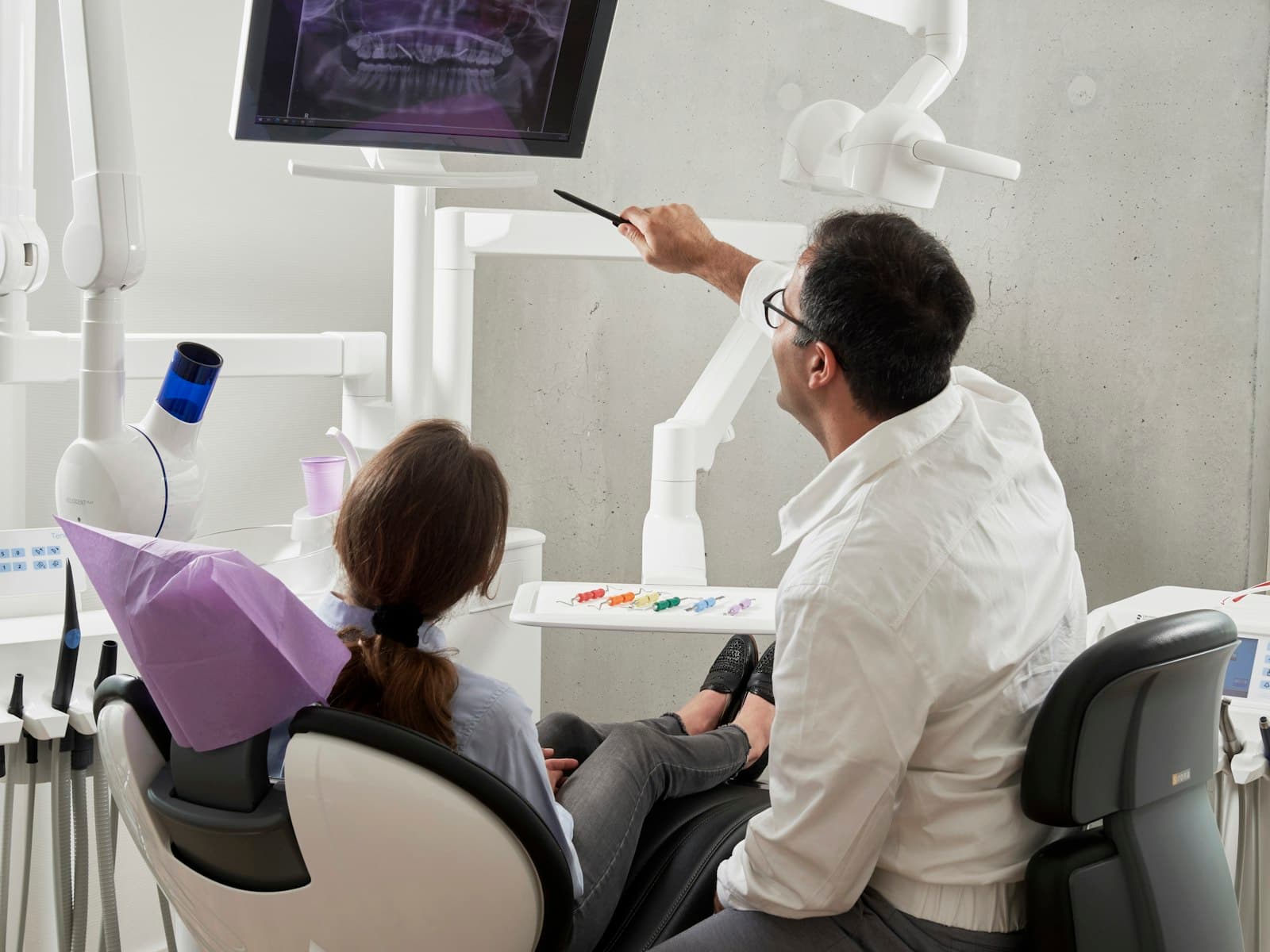
We get asked this a lot from the chair: "couldn't I just get an implant instead?" It's a fair question, but crowns and implants aren't really two versions of the same treatment — they solve two different problems. One rebuilds a tooth you still have. The other replaces a tooth you don't. Once you know which situation you're in, the decision mostly makes itself. Here's how to tell the difference, and what each option actually involves.
Dental Crowns: Rebuilding a Tooth You Still Have
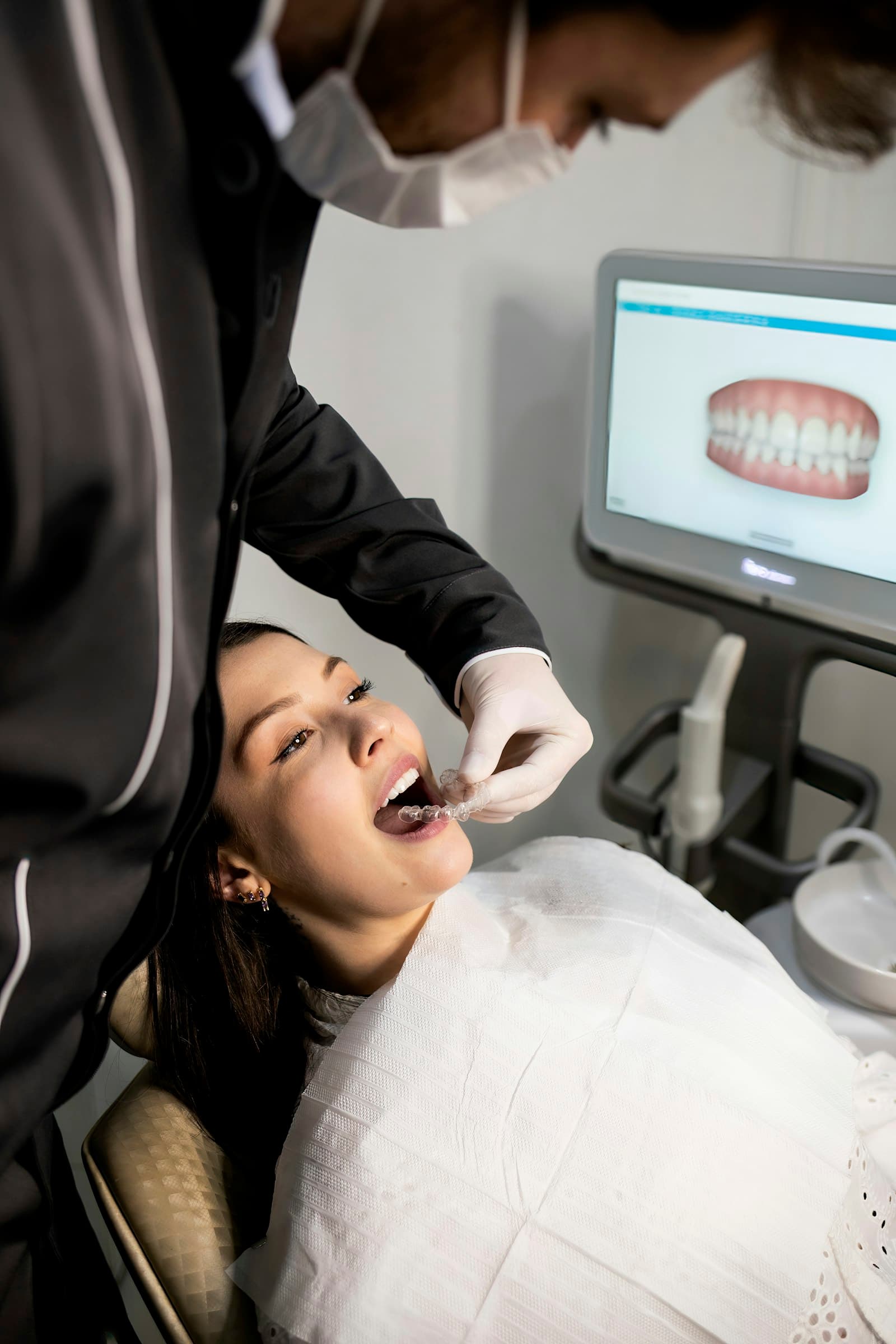
Think of a crown as a custom-made cap that fits over what's left of a natural tooth. Your own root and tooth structure stay exactly where they are — we simply reshape the damaged portion and cover it with a precision-fitted porcelain shell that matches the colour and shape of the teeth around it. Underneath, it's still your tooth doing the work.
A Crown Is the Right Call When:
- A tooth with a large crack, break or heavily decayed area a filling can't fix
- A tooth that's just had root canal treatment and needs protecting from fracture
- A tooth that's worn down, oddly shaped, or discoloured beyond whitening
- Anchoring either end of a fixed bridge
The trade-off is that a crown only works if there's enough sound tooth left to build on. If decay or a fracture has taken out too much structure — or has reached down below the gumline — a crown won't have anything solid to hold onto, and extraction becomes the more realistic path. Read more about our dental crowns service, including the step-by-step process.
Dental Implants: Replacing a Tooth That's Gone
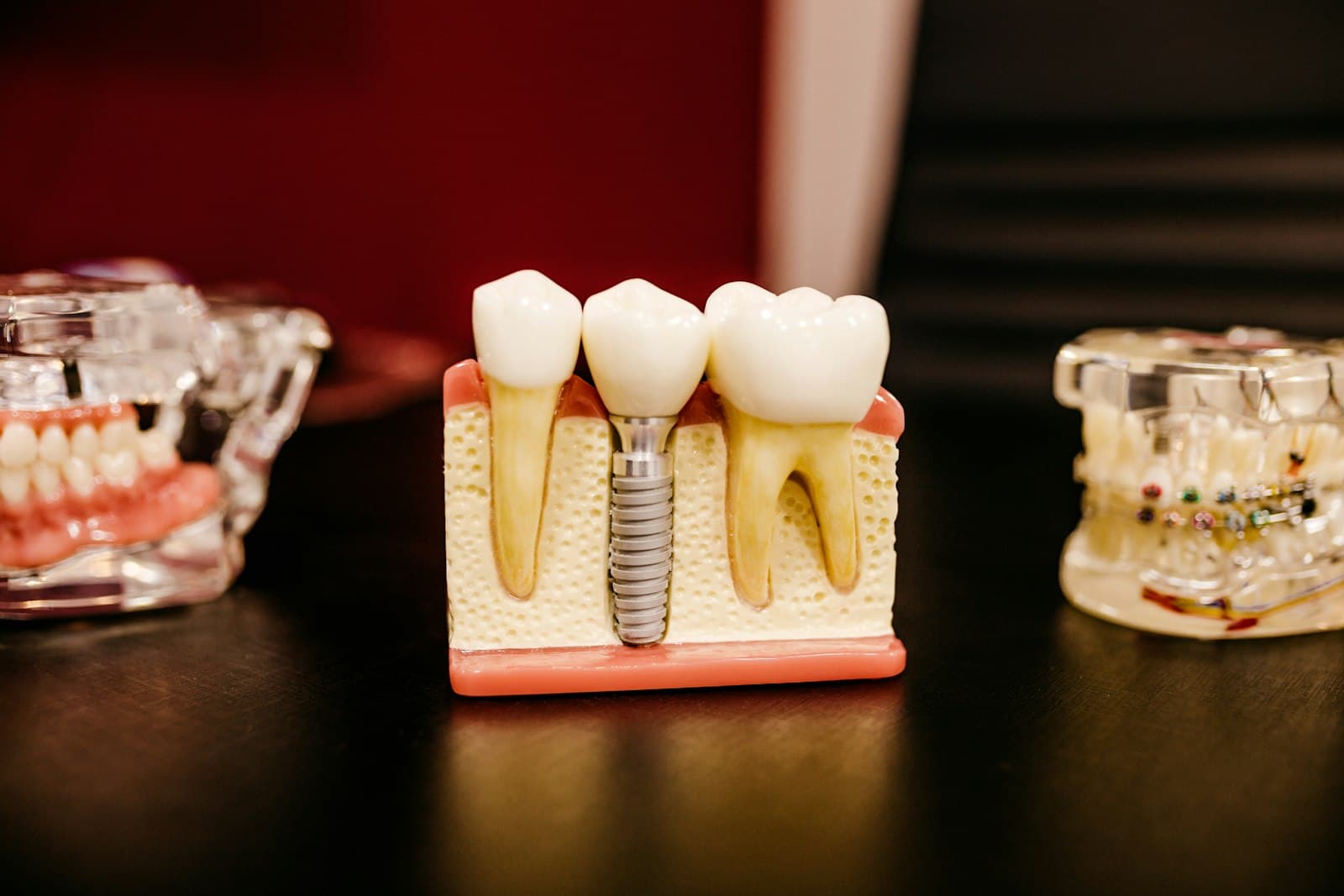
An implant starts from scratch. A small titanium post is placed into the jawbone to act as an artificial root, and over the following months it fuses to the surrounding bone — a process called osseointegration. Once that's solid, a custom abutment and porcelain crown are attached on top, completing a replacement tooth that bites, chews and looks like the real thing.
An Implant Is the Right Call When:
- A tooth that's already missing, or one damaged beyond saving
- Stopping the jawbone loss that follows a missing tooth root
- Replacing a tooth without cutting into the teeth either side of the gap
- Giving a loose denture or bridge a fixed anchor point
Because it replaces the root as well as the visible tooth, an implant is the only option of the two that stops the jawbone underneath from shrinking over time — something a crown, bridge or denture can't do, since none of them sit inside the bone. More detail is on our dental implants page.
Side by Side
Same goal — a strong, natural-looking tooth — but a very different starting point and journey to get there.
Dental Crown
Works on: a tooth that's still there, root and all
Timeline: two visits, one to two weeks apart
Jawbone: no effect either way — the root is still intact
National average: around $1,678 (ADA 2022 survey)
Dental Implant
Works on: a gap where a tooth is missing or unsalvageable
Timeline: around 4 to 8 months, start to finish
Jawbone: actively preserves it — the only option of the two that does
National average: roughly $1,700–$4,400 for placement + abutment, before the crown
So Which One Do You Actually Need?
In practice, the decision usually comes down to one question: is the tooth still salvageable? If there's enough healthy structure to build on, a crown is nearly always the simpler, less invasive, and less expensive route — and it keeps your natural root doing what it does best. If the tooth is already gone, or too damaged to save, an implant is generally the strongest long-term replacement, since it's the only option that replaces the root as well as the visible tooth.
The honest answer is that you can't reliably tell which category you're in from the mirror alone — a tooth that looks fine on the surface can have a fracture line running below the gum, and a tooth that looks badly broken sometimes has a perfectly healthy root underneath. That's why we always start with a proper exam and X-ray before recommending either option.
What Do They Cost?
We don't publish a flat price for crowns or implants, because the honest answer depends on the tooth — its location, how much preparation it needs, and whether any groundwork (like a bone graft) is required first. What we can share is the national benchmark data, so you've got a realistic starting point before your consultation.
According to CHOICE's analysis of the Australian Dental Association's 2022 fee survey, a full veneered porcelain crown averages $1,678, typically ranging $1,250 to $2,100. Implants are quoted in separate stages: the surgical placement of the implant fixture generally averages $1,334 to $3,000, with the abutment adding a further $400 to $1,404 — and that's before the crown that sits on top, which is priced similarly to a standalone crown. Treat these as a national guide rather than a quote for your tooth specifically.
We're an approved DentiCare provider — SmileNow covers treatment up to $2,000 interest-free with no deposit, and DentiCare Plus extends that to $12,000 over 24 months, also interest-free. Zip Money is accepted too.
At Mount Druitt Dental Care
Not Sure Which One You Need?
Book a consultation and we'll tell you straight — no pressure, no guesswork.
What Happens If You Leave a Missing Tooth Unreplaced?
If the gap doesn't hurt, it's easy to put off doing anything about it. The problem is that a missing tooth rarely stays a purely cosmetic issue — the changes underneath tend to happen quietly, well before you'd notice them yourself.
- The jawbone under the gap starts to shrink within months, since it's no longer being stimulated by a tooth root
- Neighbouring teeth gradually drift into the empty space, which can throw off your bite
- The opposing tooth (top or bottom) can over-erupt, since it no longer has anything to bite against
- Chewing shifts onto other teeth, which wears them down faster than normal
None of this means you need to rush into treatment the moment a tooth is lost. It does mean it's worth having the gap assessed sooner rather than later — the longer bone loss continues, the more likely a future implant will need a bone graft first, which adds time and cost you could have avoided by acting earlier.
Getting Ready for Your Consultation
- Bring a list of any medications or health conditions — some can affect healing time, particularly for implants
- Mention if you grind your teeth at night, as it changes how a crown or implant is planned
- Ask about a payment plan upfront if cost is a factor — we'll walk you through the options before any treatment starts
- If it's for a front tooth, bring a photo of how it used to look — it helps us match the shape and shade
Whether it turns out to be a crown, an implant, or something simpler like a filling, you'll leave your consultation with a clear plan and an exact price — never a guess.
Please note: Cost figures, payment plan terms and health fund information in this article are correct as of September 2026 and may change. For advice and pricing specific to your own tooth, please book a consultation with our team.