In Short
- The real first decision isn't which brand or colour — it's fixed braces or removable clear aligners, since that choice rules out or rules in most of the other options.
- Healthdirect puts typical treatment at 12 to 24 months, plus a retainer worn for 12 to 24 months or longer afterwards.
- Full-course costs published by Orthodontics Australia run roughly $6,000–$9,000 for metal, $7,000–$11,000 for ceramic, $9,500–$15,000 for lingual, and $6,000–$9,500 for clear aligners — treat these as indicative, not a quote.
- Medicare doesn't cover orthodontic treatment and the Child Dental Benefits Schedule explicitly excludes it, though many private extras policies contribute something after a waiting period.
Crowded, gapped or uneven teeth are one of the most common reasons people book in for something other than pain.
These days, fixing it doesn't automatically mean the same metal brackets your older sibling had.
What's changed is how many genuinely different paths there are to the same result, so we've built this guide around the one decision that narrows them all down fastest.
Do You — or Your Child — Actually Need Them?
There's no single sign that means "you need braces." It's usually a combination of a few of the following, and a dentist is the only one who can tell you for certain.
- Crowding is bad enough that brushing or flossing properly feels impossible
- There's a noticeable gap between two or more teeth
- Your bite doesn't close evenly — sometimes felt as jaw clicking, clenching, or one side of your teeth wearing faster than the other
- You've had a tooth removed in the past and the teeth either side have been tilting into the gap ever since
- You're simply not comfortable with how your teeth look, and it affects your confidence
When's the Right Time to Get It Checked?
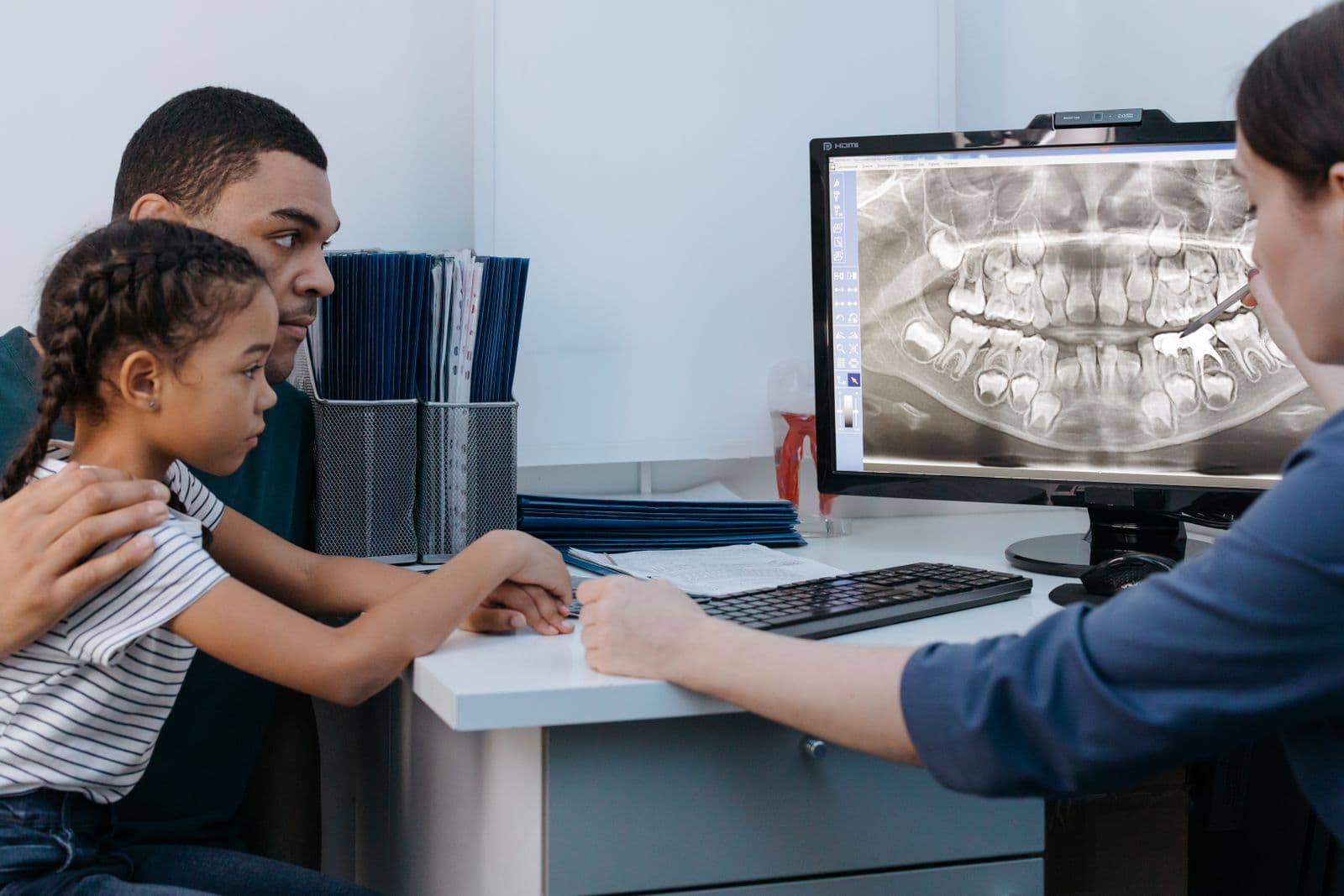
The Australian Society of Orthodontists recommends children have their first orthodontic assessment around age 7 — not because treatment usually starts that early, but because enough adult teeth have come through by then to give a clear picture of how the rest will develop. Most seven-year-olds assessed this way need nothing more than monitoring.
Actual treatment more commonly begins in the early-to-mid teens, once most permanent teeth are in place. That said, plenty of adults start treatment for the first time later in life — as covered above, there's no cut-off age, only a healthy mouth to build on.
Fixed or Removable — The Big Fork in the Road
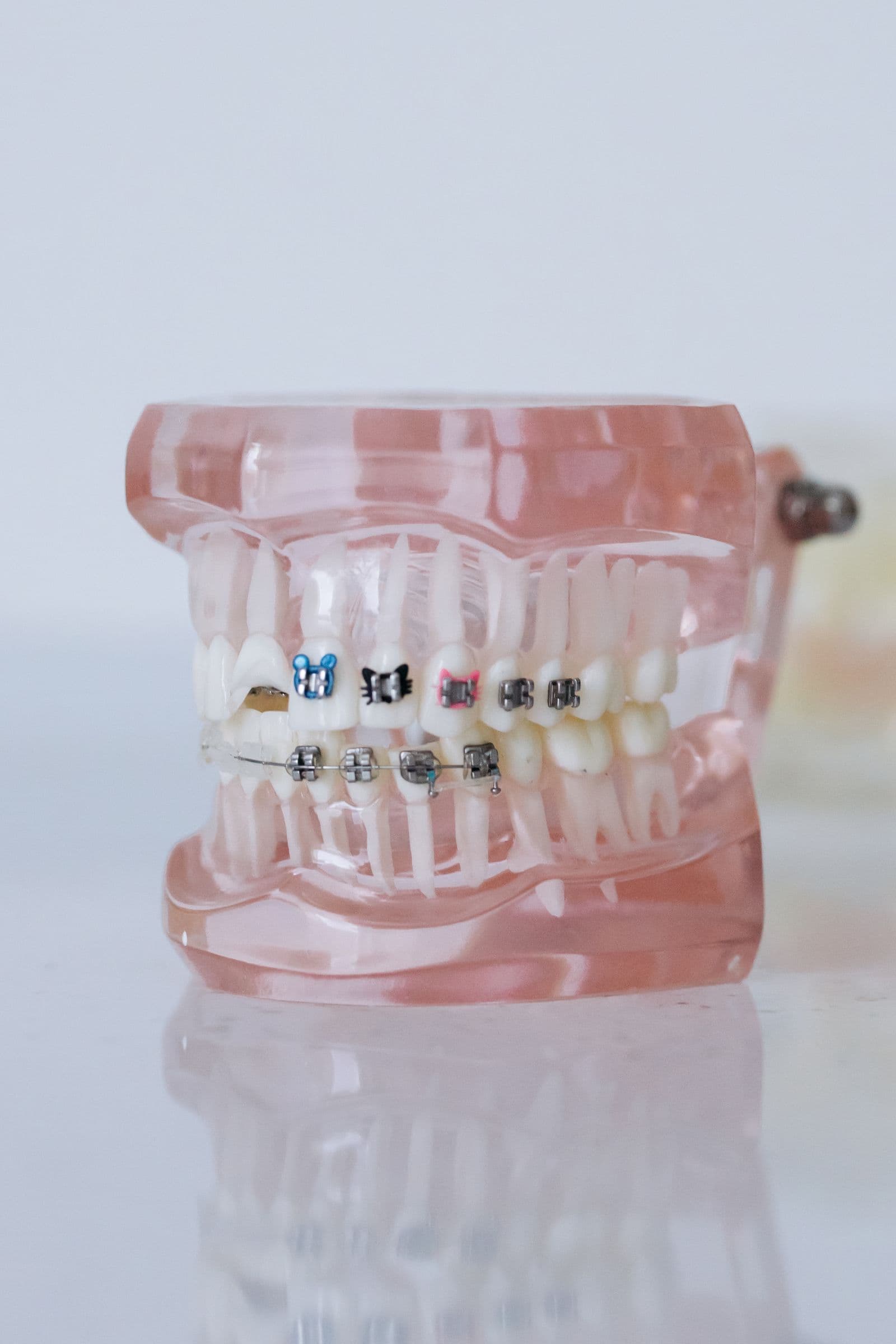
Every option on the market falls into one of two camps: bonded to your teeth for the whole course of treatment, or a tray you can take out yourself. That single distinction shapes almost everything else about the experience.
Fixed Braces
Metal Braces
Still the default for a reason — nothing else treats as wide a range of cases at as low a cost. Small brackets go on each tooth and a wire threaded through them does the actual work, tightened a little more at every visit. Visibility is the one thing patients weigh up, though kids often turn that into a plus by picking a new elastic colour each appointment.
Self-Ligating Braces
A variation on the same idea, except the wire clips straight into each bracket instead of being tied down with elastics. Fewer parts means less for plaque to cling to, and appointments tend to run shorter since there's nothing to swap out — just a check and a tighten. Available in metal or tooth-coloured versions, usually for a bit more than the standard option.
Ceramic Braces
The same wire-and-bracket setup as metal braces, just with brackets tinted to your tooth shade so they're far less obvious in photos. The trade-off is upkeep — these brackets chip more easily than metal, and can dull or pick up colour if red wine, turmeric or curry are regulars in your diet.
Lingual Braces
The only fixed option that can't be seen at all, since the brackets sit on the tongue side of your teeth rather than the front. Talking normally again takes longer to come back than with any other type, and because every bracket has to be custom-positioned for that side of the tooth, it's the most involved — and priciest — system to fit. Only some practices offer it.
Clear Aligners
The removable option — Invisalign is the name most people know — works through a stack of clear trays, each one nudging your teeth slightly further than the last. A new tray goes in roughly every fortnight, and because you take them out yourself, eating and cleaning stay completely normal. Results come down entirely to discipline: leave them out too often and the 20-to-22-hours-a-day target that actually moves your teeth just doesn't happen.

Where aligners tend to come unstuck is a tooth that needs to properly rotate, or a bite that's badly off — that kind of movement usually needs the constant, direct pressure only a bonded bracket can apply. Straightforward crowding and gaps are where trays genuinely shine. At Mount Druitt Dental Care, Nafeena provides Invisalign consultations in-house as part of our cosmetic and restorative treatments.
Side by Side
Fixed Braces
Removable: no — bonded on for the full course
Best for: any level of complexity, including severe cases
Adjustments: in-person, roughly every 6–8 weeks
Indicative cost: $6,000–$15,000 depending on type
Clear Aligners
Removable: yes — out for eating, brushing and flossing
Best for: mild to moderate crowding and spacing
Adjustments: mostly at home, tray changed every 1–2 weeks
Indicative cost: $6,000–$9,500 for a full course
What Do They Actually Cost in Australia?
Australia doesn't have a fixed schedule of dental fees, so any figure you see online — including this one — is an indicative range rather than a quote. With that caveat, Compare Dentists' review of Orthodontics Australia's published benchmarks puts a full course of metal braces at roughly $6,000–$9,000, ceramic braces at $7,000–$11,000, lingual braces at $9,500–$15,000, and clear aligners at $6,000–$9,500. Self-ligating braces aren't listed separately, but generally sit close to standard braces of the same bracket material.
On the insurance side, CHOICE's analysis of the Australian Dental Association's fee survey shows the average private health fund rebate for orthodontic treatment (item 881) sits around $1,096, typically ranging $300 to $3,600 — that's the fund's contribution, not the total treatment cost, and it depends heavily on your specific policy and any waiting periods.
Medicare doesn't fund orthodontic treatment, and the Child Dental Benefits Schedule (CDBS) specifically excludes it — so for most families, a health fund benefit and a payment plan are what make the numbers manageable.
We're an approved DentiCare provider — SmileNow covers treatment up to $2,000 interest-free with no deposit, and DentiCare Plus extends that to $12,000 over 24 months, also interest-free.
At Mount Druitt Dental Care
Not Sure Which Option Fits?
Book a consultation and we'll assess your bite and talk you through it honestly.
How We Handle This at Mount Druitt Dental Care
We start with a proper look at your bite and alignment as part of a general check-up, so there's no separate referral needed just to have the conversation. From there, we're upfront about what we can offer directly and what's better handled elsewhere.
For clear aligners, our team offers Invisalign consultations in-house. For more complex cases needing fixed braces — particularly lingual braces or difficult bite corrections — we'll refer you to a specialist orthodontist we trust, rather than take on a case outside our scope. Either way, our DentiCare payment plans apply.
The honest goal is matching you with the right treatment and the right provider — not steering every case toward whatever we happen to offer.
Looking After Braces or Aligners Day to Day
- Give brackets and wires a proper going-over with your toothbrush every time you eat, not just morning and night
- A water flosser or a small interdental brush gets under the wire in a way a normal toothbrush can't
- Fixed braces and anything crunchy, chewy or gummy don't mix well — that combination is how wires get bent and brackets come loose
- Aligners come out for meals, so there's genuinely nothing to avoid — just get in the habit of putting them straight back in afterwards
- The trays only straighten your teeth while they're actually in your mouth, so 20 to 22 hours a day is the number to aim for
- Every adjustment visit exists for a reason — missing one pushes your finish date back, not forward
- Retainers aren't optional once treatment ends; teeth start shifting back within weeks of nothing holding them in place
Two people with near-identical crowding can walk out of a consultation with two completely different treatment plans, and that's normal — your bite, your timeline and your tolerance for visibility all pull in different directions.
Please note: Cost figures, payment plan terms and health fund information in this article are correct as of September 2026 and may change. For advice and pricing specific to your own teeth, please book a consultation with our team.